Bladeless LASIK in Korea –
Seoul BGSS Eye Clinic in
Apgujeong, Gangnam
Bladeless LASIK in Seoul — Femtosecond Flaps, No Microkeratome
In bladeless LASIK, a femtosecond laser — not a mechanical blade — creates the corneal flap. That gives the surgeon precise control of flap depth, diameter and edge shape. Both eyes ₩1.9M–₩2.4M at BGSS.
- Flap created by femtosecond laser
- Flap thickness and diameter planned in advance
- Both eyes ₩1.9M–₩2.4M (≈ $1,340–$1,690), exam included
What is bladeless LASIK and is it safer than LASIK with a blade?
Bladeless (all-laser or femto) LASIK uses a femtosecond laser to create the corneal flap instead of a mechanical microkeratome blade. The laser allows a planned, uniform flap thickness and diameter, and reviews associate it with fewer flap complications such as irregular or incomplete flaps. At BGSS, all LASIK is bladeless and costs ₩1.9M–₩2.4M for both eyes.
- Flap made by
- Femtosecond laser
- Reshaping by
- Excimer laser
- Price (both eyes)
- ₩1.9M – ₩2.4M
- Recovery
- Next day
Femtosecond laser vs mechanical microkeratome
How the two ways of making a LASIK flap compare, based on published reviews.
| Microkeratome (blade) | Femtosecond laser (bladeless) | |
|---|---|---|
| Mechanism | Oscillating blade passes across the cornea | Laser pulses create a cleavage plane at a set depth |
| Flap thickness | More variable, thicker at edges | Planned and more uniform (planar) |
| Edge geometry | Bevelled by blade path | Programmable side-cut angle |
| Flap complications | Buttonholes, free or incomplete flaps possible | Lower reported rates of these complications |
| Specific effects | — | Transient light sensitivity or gas bubbles, usually short-lived |
Source: PubMed review of LASIK (lasikReview). BGSS performs all LASIK bladeless.
How a femtosecond laser makes the flap
A femtosecond laser fires ultrashort pulses focused at a precise depth inside the cornea. Each pulse forms a microscopic bubble; thousands of these, placed side by side, create a smooth plane. A final side cut reaches the surface, leaving a hinge so the flap stays attached.
Because depth is set by software, the surgeon can plan a thinner, more uniform flap and preserve more of the residual stromal bed beneath — the structural reserve that matters most for long-term corneal stability. The excimer laser then reshapes that bed using your wavefront and topography data.
- Planned depth: consistent flap thickness
- Planned diameter: matched to treatment zone
- Side-cut angle: helps the flap sit securely
- Hinge: allows precise repositioning
Key point: bladeless does not mean flapless. If you want to avoid a flap altogether, compare SMILE Pro or LASEK.
Your treatment plan and price within 24 hours
- 1 Send a photo of your glasses or prescription
- 2 Get a likely procedure and estimated cost
- 3 Reserve an exam slot for your trip
No obligation · English · 中文 · 日本語 · Tiếng Việt · Монгол · Bahasa Indonesia
Who is suitable for bladeless LASIK?
General criteria; your exam decides.
Usually suitable
- Age 18+ with a stable prescription
- Mild–moderate myopia, hyperopia or astigmatism
- Corneal thickness sufficient for a flap and safe residual bed
- Wants fast visual recovery (next day)
Usually better with another option
- Thin cornea or keratoconus signs → LASEK or ICL
- High-impact contact sports → flapless options
- Very high myopia → EVO ICL
- Significant dry eye → SMILE Pro may be preferred
Bladeless LASIK step by step
Typically 10–15 minutes in the operating room for both eyes.
Numbing drops
Anaesthetic drops are applied; an eyelid holder keeps your eye open comfortably.
Femtosecond flap
A suction ring stabilises the eye while the laser creates the flap — vision may dim briefly.
Excimer reshaping
The flap is lifted and the excimer laser reshapes the stroma for a few seconds while you look at a light.
Flap repositioned
The flap is laid back and adheres without stitches. Most people see functionally the next morning.
BGSS Eye Clinic 2026 prices
Every package includes the pre-operative exam, the surgery and standard post-op medications.
| Procedure | Price (KRW) | Approx. USD | Recovery |
|---|---|---|---|
| LASIK (both eyes) | ₩1,900,000 – ₩2,400,000 | $1,340 – $1,690 | 1 day |
| LASEK / PRK (both eyes) | ₩2,200,000 – ₩2,800,000 | $1,550 – $1,980 | 3–5 days |
| SMILE / SMILE Pro (both eyes) | ₩2,500,000 – ₩4,000,000 | $1,760 – $2,830 | 1–2 days |
| EVO ICL (both eyes) | ₩5,200,000 – ₩7,000,000 | $3,670 – $4,950 | 1 day |
| Cataract / presbyopia lens (per eye) | ₩1,500,000 – ₩7,250,000 | $1,060 – $5,120 | 1–2 days |
USD values are approximate and vary with exchange rates. Final pricing is confirmed after your pre-operative exam.
- Full pre-operative diagnostic exam (2–3 hours)
- Surgery performed by a board-certified ophthalmologist
- Standard post-op eye drops and check-ups before you fly
- Medical interpreter and English medical records
Which procedure fits your eyes?
Answer 3 quick questions to see the procedure most often suited to people like you, with the 2026 starting price. Then send it to a coordinator for a free personal review.
- FREE No obligation, no deposit to ask
- 24h Reply from our international team
- MD Final plan confirmed by an ophthalmologist after your exam
How old are you?
Written and reviewed by the surgeons who perform it
Every figure on this page is a published BGSS total or a public credential you can check.
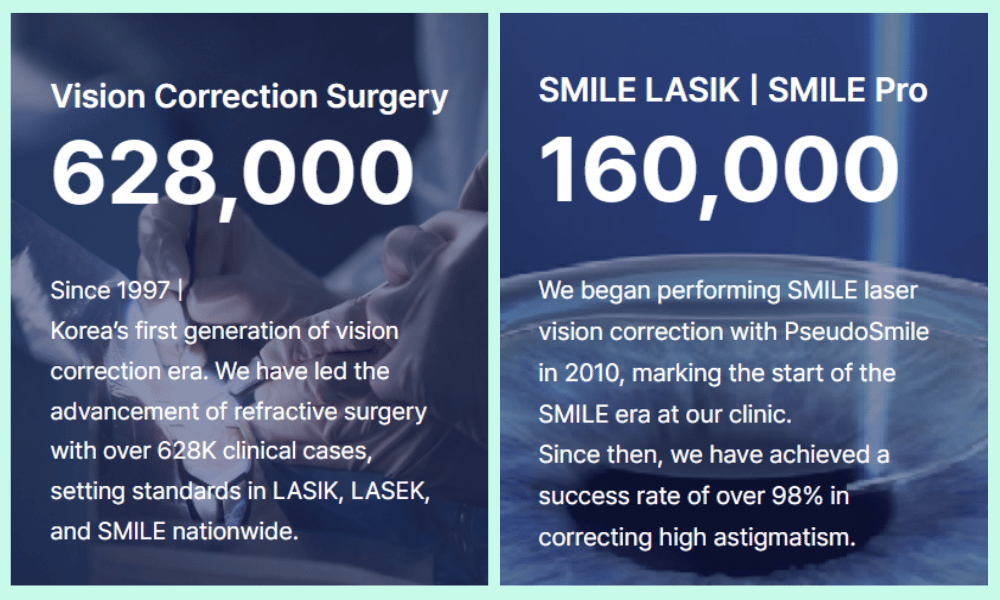
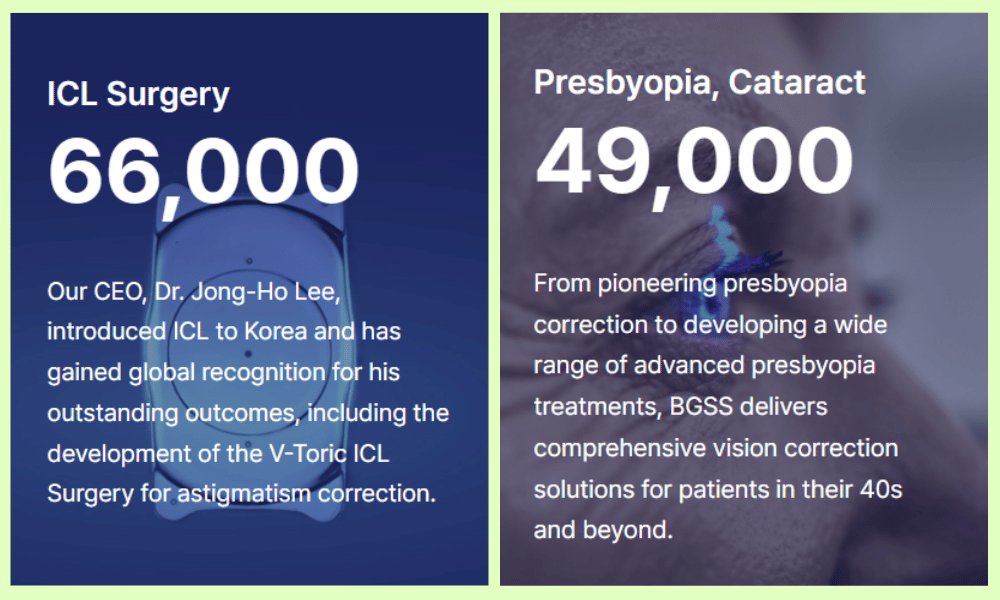
- 160,000+ SMILE / SMILE Pro
- 66,000+ ICL lens implants
- 49,000+ presbyopia & cataract
- Many with M.D., Ph.D. research backgrounds
- Founder Dr. Jong-Ho Lee: 56,000+ ICL eyes
- Complex-case and toric ICL positioning
- STAAR Surgical EVO ICL APAC Experts Summit (2024)
- Korea SMILE Forum (2025)
- Korea EVO ICL Forum (2025)
- Among Korea's first to introduce LASIK & LASEK
- Ministry of Health & Welfare–designated regenerative medicine institution
- 2026 prices published openly
- Medical content reviewed by an ophthalmologist
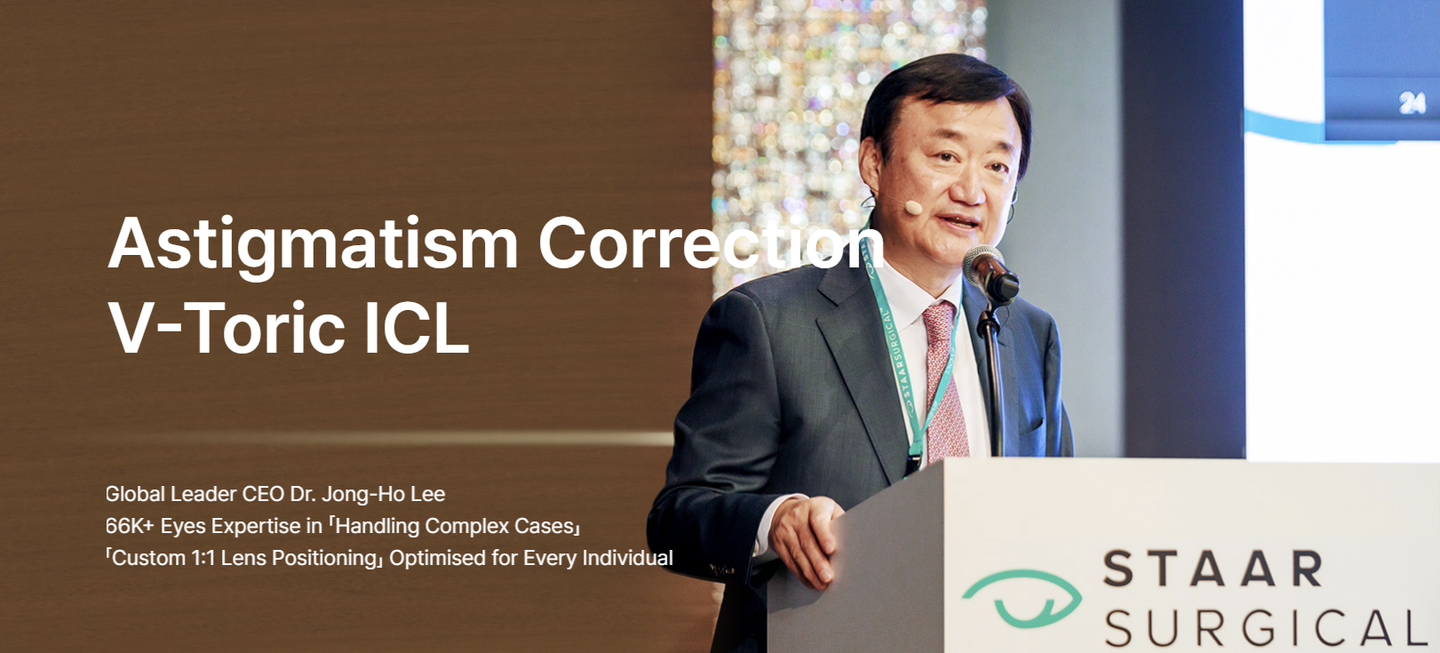
Dr. Jong-Ho Lee, M.D., Ph.D.
Dr. Lee is a pioneer of first-generation LASIK, LASEK and ICL in Korea and is known internationally for complex-case ICL and custom lens positioning for astigmatism. He reviews the medical content on this website.
Editorial policy: clinical statements on this page are checked against the sources below and BGSS outcome data, and are reviewed at least once a year. Prices are the clinic's published 2026 rates.
How surgery in Korea works, step by step
Most international patients plan a stay of about one week. Your coordinator confirms the exact timeline after reviewing your records.
Send your details
WhatsApp, LINE, WeChat or KakaoTalk your prescription and preferred dates. Free, with no obligation.
Get a personal plan
Receive a likely procedure, an estimated cost and a reserved exam slot.
Exam & surgery in Seoul
A 2–3 hour exam with your surgeon. If suitable, surgery can often be the same or next day.
Follow-up & fly home
Post-op checks before departure, then remote follow-up. Your surgeon confirms when it is safe to fly.
Frequently asked questions
Is all LASIK at BGSS bladeless?
Yes. BGSS creates LASIK flaps with a femtosecond laser, combined with wavefront/topography-guided excimer treatment.
How much does bladeless LASIK cost in Korea?
At BGSS, bladeless LASIK costs ₩1,900,000–₩2,400,000 (about $1,340–$1,690) for both eyes, including exam, surgery and standard medications.
Is bladeless LASIK the same as SMILE?
No. Bladeless LASIK still creates a flap, only with a laser instead of a blade. SMILE Pro uses no flap — just a 2–4 mm incision.
Can the flap move after bladeless LASIK?
Flap displacement is rare but possible after significant eye trauma, especially early on. Avoid rubbing your eyes and protect them during sport as advised.
Does the suction hurt?
You will feel pressure and your vision may dim for a few seconds during suction, but numbing drops prevent pain for most people.
Ready to see clearly? Start with a free consultation.
Send your prescription today and get a personal treatment plan and price estimate within 24 hours.
- Free consultation
- No obligation
- Reply within 24 hours
- Korea's first JCI-accredited eye clinic
Medical information on this page is for general education and does not replace a consultation with an ophthalmologist. Results vary by individual, and suitability is determined after a full pre-operative eye examination. Statistics: BGSS Seoul + Busan cumulative totals as of December 2025.
Advanced Blade-Free Vision Correction in Seoul, Korea
Bladeless LASIK—also called All-Laser LASIK—uses a femtosecond laser instead of a mechanical blade to create the corneal flap. This enhances precision, improves flap consistency, and may reduce certain flap-related complications compared with traditional microkeratome LASIK.
At Seoul BGSS Eye Clinic in Apgujeong, bladeless LASIK is performed following comprehensive corneal mapping, pachymetry, wavefront analysis, and tear film evaluation to determine candidacy and optimize outcomes.
What Is Bladeless LASIK?
Bladeless LASIK replaces the mechanical blade with a femtosecond laser to create the corneal flap. The excimer laser then reshapes the cornea to correct:
- Myopia (nearsightedness)
- Hyperopia (farsightedness)
- Astigmatism
Key Advantages
✔ Greater flap precision and thickness control
✔ Reduced risk of blade-related irregularities
✔ Faster visual recovery in many patients
✔ Enhanced safety profile with modern laser systems
Why Choose Seoul BGSS Eye Clinic in Apgujeong, Gangnam?
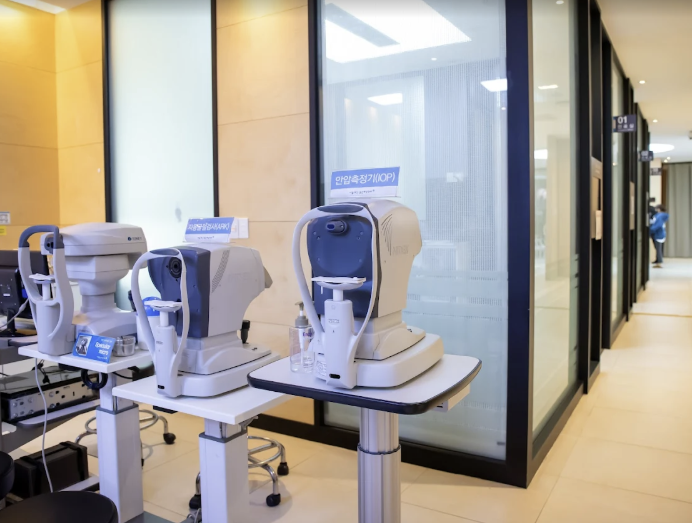
✔ Advanced Diagnostic System
- Corneal topography & tomography
- Aberrometry (wavefront analysis)
- Tear film and dry eye assessment
- Retinal and optic nerve evaluation
✔ Customized Surgical Planning
Each patient undergoes individualized refractive planning. If bladeless LASIK is not optimal, alternatives such as SMILE or lens implantation may be discussed.
✔ International Patient Care
- English-speaking coordinators
- Streamlined scheduling for overseas patients
- Post-operative guidance for short-term visitors
Who Is a Good Candidate?
Bladeless LASIK may be suitable if you:
- Are over 18 years old
- Have stable prescription (≥1 year)
- Have adequate corneal thickness
- Do not have advanced keratoconus or severe dry eye
Final eligibility is determined after detailed ophthalmic examination.
Procedure Overview
- Comprehensive Eye Examination
- Femtosecond Laser Flap Creation
- Excimer Laser Corneal Reshaping
- Flap Repositioning
- Follow-Up Monitoring
Procedure time is typically 10–15 minutes per eye, with vision improvement often noticeable within 24–48 hours.
Recovery & Aftercare
- Mild dryness or light sensitivity for several days
- Avoid eye rubbing
- Use prescribed antibiotic and lubricating drops
- Follow scheduled follow-up appointments
Most patients return to daily activities within a few days.
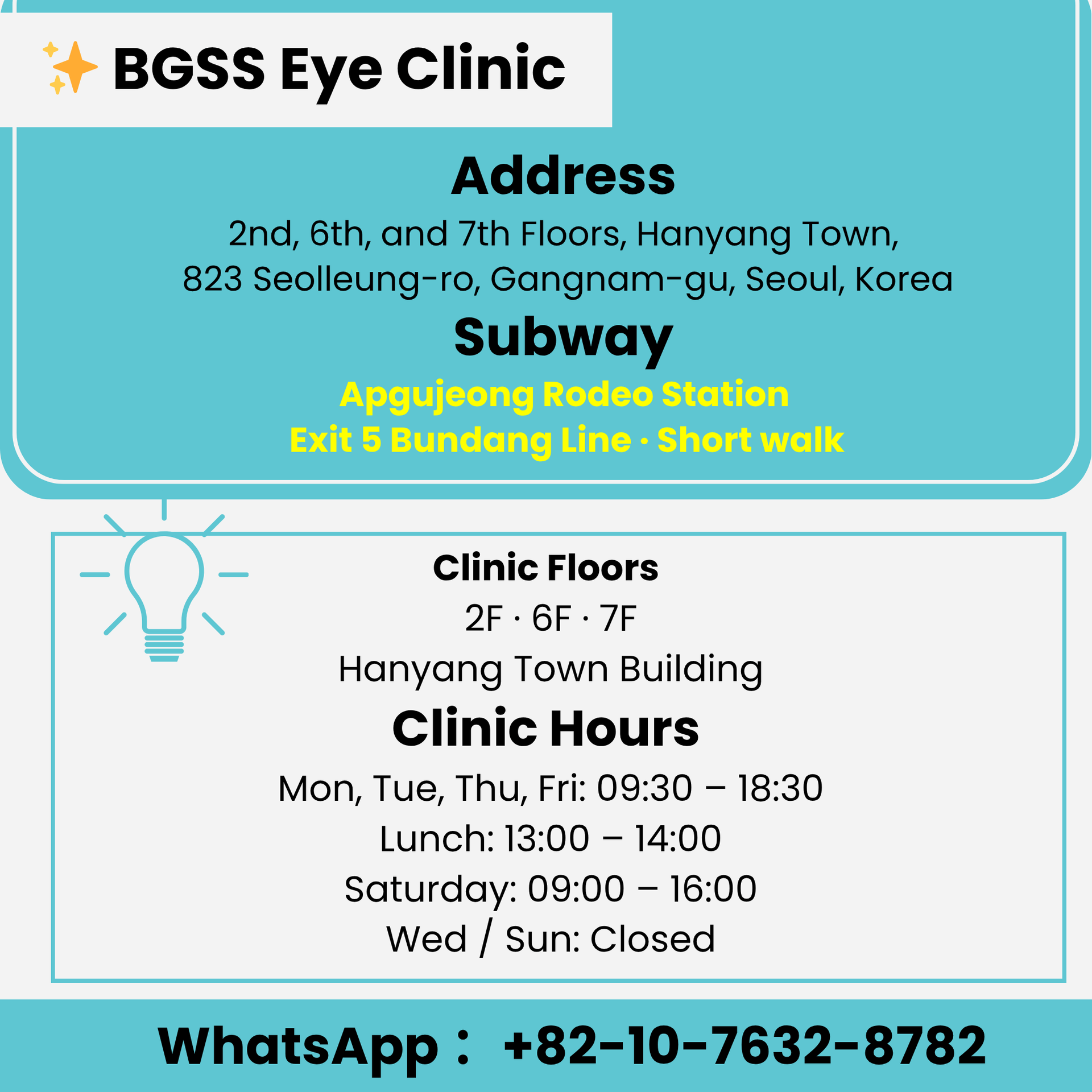
Location – Apgujeong, Gangnam, Seoul
Bladeless LASIK is available at Seoul BGSS Eye Clinic, located in the heart of Gangnam, a leading medical district in Korea known for advanced ophthalmic technology and high surgical standards.