Is SMILE Pro Safe Long-Term Results and Patient Experience
Is SMILE Pro Safe Long-Term Results and Patient Experience
If you’re researching SMILE Pro (Small Incision Lenticule Extraction) for vision correction, two of the most common questions are:
- Is it safe in the long term?
- What do patients experience before, during, and after surgery?
This guide gives you a clear, evidence-based answer so you can make an informed decision — especially if you’re considering SMILE Pro in Korea.
What Is SMILE Pro?
SMILE Pro is an advanced, minimally invasive laser vision correction procedure. A femtosecond laser creates a small lenticule (a lens-shaped piece of corneal tissue) inside the cornea, which is removed through a tiny incision. This reshapes the cornea to correct refractive errors like myopia and astigmatism.
Unlike LASIK, SMILE Pro does not require a large corneal flap — which has important implications for safety and recovery.
Long-Term Safety: What Research Shows
Corneal Biomechanics Preserved
One of the biggest safety strengths of SMILE Pro is that it leaves most of the corneal structure intact.
Preserving corneal strength reduces:
- Flap-related complications
- Risk of dislocation from trauma
- Dry eye severity compared to LASIK
Long-term data over many years show stable corneal integrity after SMILE-type procedures.
Low Complication Rates
SMILE Pro has a low incidence of serious complications when performed by experienced surgeons:
- Infection is rare
- Vision-threatening events are uncommon
- Enhancements (touch-ups) are possible when needed
This aligns with many clinical reports showing durable safety profiles.
Stable Refractive Outcomes
Studies tracking patients for several years after SMILE indicate:
- Long-lasting correction of myopia and astigmatism
- Minimal regression in most cases
- Consistent visual acuity
Patients typically maintain clear vision without progression of refractive error once healing stabilizes.
Long-Term Side Effects: What Patients May Experience
Dry Eye
- Less common than LASIK
- Usually mild and temporary
- Improves over months
Because SMILE Pro disrupts fewer corneal nerves, dry eye symptoms are often reduced compared to flap-based surgery.
Night Vision Complaints (Halos/Glare)
Temporary night vision issues like halos or glare can occur, especially during early healing. Most patients notice these improve over months.
Mild Refractive Fluctuations
Minor vision fluctuations can happen, particularly in the first year, but most stabilize permanently.
Patient Experience: What to Expect
Before Surgery
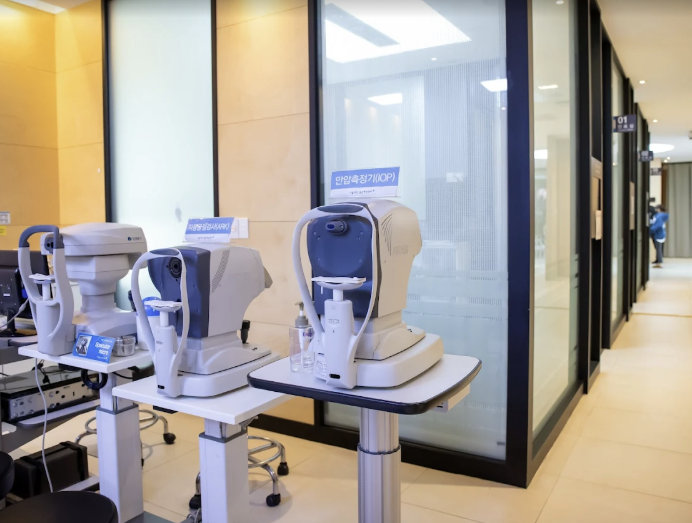
- Full eye exam
- Corneal mapping and thickness analysis
- Dry eye assessment
- Pupil size measurement
- Astigmatism evaluation
Detailed diagnostics are critical to confirm candidacy.
Day of Surgery
- Local anesthetic drops only
- Short procedure (10–15 minutes per eye)
- Minimal discomfort
Many patients describe only slight pressure or mild sensations.
Immediate Recovery
- Vision improves quickly (often within 24–48 hours)
- Mild irritation, dryness, or light sensitivity possible
- Most return to normal daily activities soon
Many patients report surprisingly rapid visual comfort.
Follow-Ups
Typical follow-up schedule includes:
- Day 1 post-op
- 1 week
- 1 month
- 3–6 months (if needed)
Some clinics offer remote follow-up options for international patients.
How Long Does Complete Healing Take?
- First 1–2 Days: Vision sharpens rapidly
- 1–2 Weeks: Surface and visual stability improves
- 1–3 Months: Brain and eye adaptation completes
- 6–12 Months: Final visual outcomes fully stabilized
Healing varies by individual, but most patients reach long-term stability within several months.
Who Is a Good Candidate?
SMILE Pro is often recommended for:
- Moderate to high myopia
- Astigmatism in the treatable range
- Thin corneas (compared to LASIK thresholds)
- Patients who want a flap-free option
- People at risk of corneal trauma (athletes, active lifestyles)
However, a detailed pre-operative scan and consultation are essential to confirm candidacy.
Benefits Patients Often Highlight
✔
Fast visual recovery
✔
Minimal discomfort
✔
Lower dry eye risk
✔
No large corneal flap
✔
Stable long-term results
✔
High satisfaction in daily life activities
Many patients describe natural and comfortable vision, with rapid transition back to work and lifestyle routines.
Are Enhancements Possible?
Yes — if a small residual correction is needed later, enhancement procedures can be performed depending on your corneal profile.
Enhancements are typically less common and often simpler than initial surgery.
Safety Compared to Other Procedures
SMILE Pro vs LASIK
- No flap → fewer flap complications
- Lower dry eye incidence
- Comparable visual outcomes
SMILE Pro vs LASEK
- Faster recovery
- Less surface discomfort
- Suitable for a wide range of prescriptions
SMILE Pro vs ICL
- No implant inside the eye
- Ideal for thinner corneas
- ICL can be better for very high prescriptions
Final Thoughts
SMILE Pro is safe and effective with excellent long-term results when performed by an experienced refractive surgeon. Its strengths include:
- Preserving corneal structure
- Lower dry eye risk
- Strong long-term stability
- High patient satisfaction
Most patients enjoy fast recovery and lasting vision improvement.
As with all medical decisions, individualized assessment is key — so a comprehensive consultation is the best way to determine if SMILE Pro is right for your eyes.