Laser Vision Correction in Korea –
Advanced Refractive Surgery in Seoul
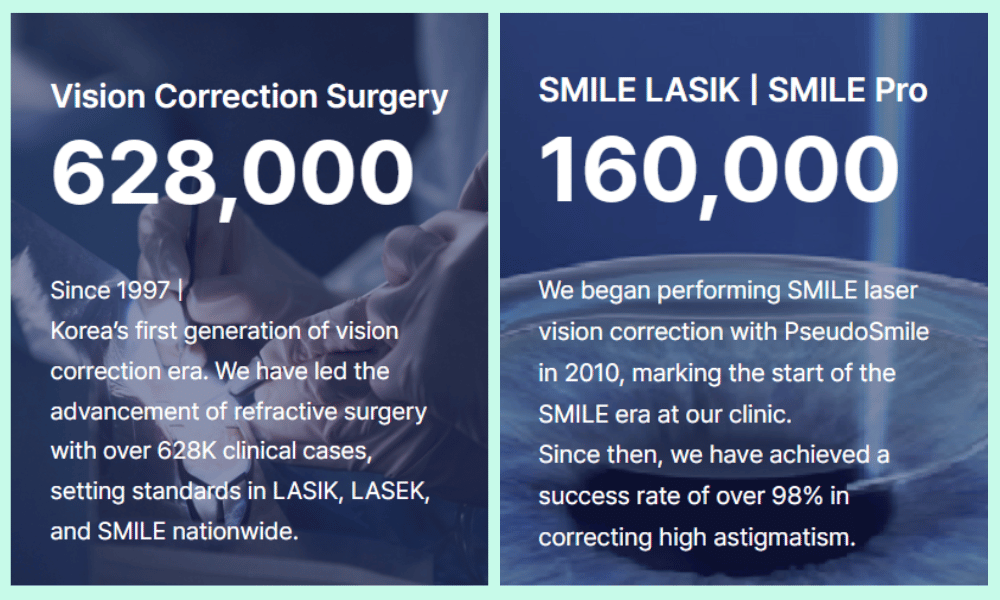
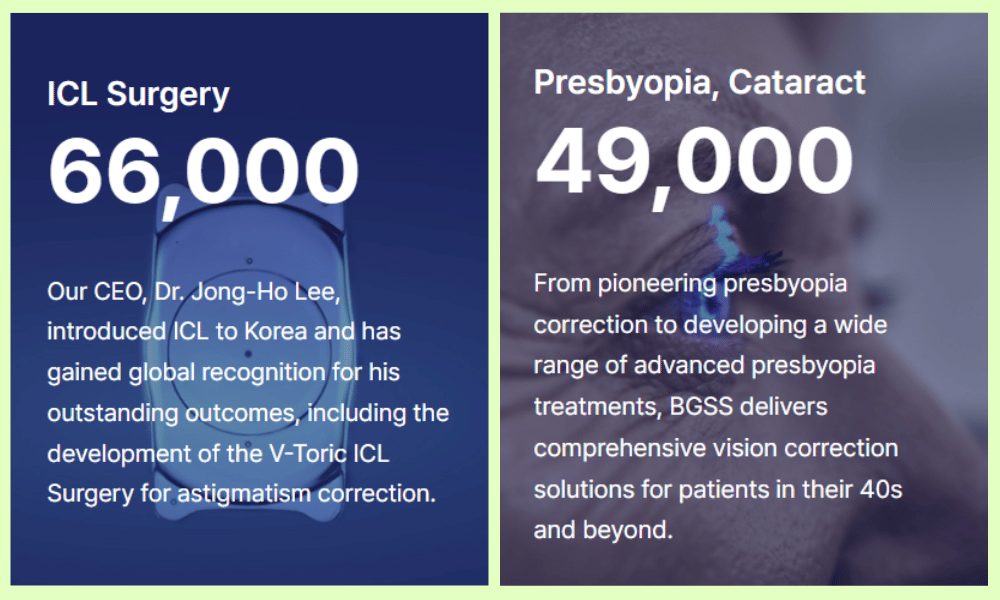
Laser vision correction in Korea has become a leading option for patients seeking precise, technology-driven refractive surgery. Seoul—particularly Gangnam—is home to specialized ophthalmology centers offering advanced procedures such as SMILE, LASIK, LASEK, and ICL lens implantation.
Korea is known for:
- High surgical volume and subspecialized refractive surgeons
- Advanced ZEISS and femtosecond laser platforms
- Competitive pricing compared to the US, Canada, Australia, and Singapore
- Structured pre- and post-operative evaluation systems
Types of Laser Vision Correction in Korea
1️⃣ SMILE (Small Incision Lenticule Extraction)
- Minimally invasive
- No corneal flap
- Reduced dry eye risk in suitable candidates
- Fast visual recovery
2️⃣ LASIK (Femtosecond / Bladeless)
- Precise flap creation using femtosecond laser
- Quick recovery
- Widely performed worldwide
3️⃣ Custom / Wavefront LASIK
- Personalized mapping-based correction
- Addresses higher-order aberrations
- Improved night vision clarity
4️⃣ LASEK / PRK
- Surface-based laser
- Suitable for thinner corneas
- Longer recovery but strong long-term stability
5️⃣ ICL (Implantable Collamer Lens)
- Lens implanted inside the eye
- Suitable for high myopia or thin corneas
- Reversible option
Typical Cost Range (Approximate)
ProcedureEstimated Range (KRW)SMILE₩2.5M – ₩3.8MLASIK₩1.8M – ₩3.0MLASEK₩1.5M – ₩2.5MICL₩4.5M – ₩7.0M
Final pricing depends on prescription strength, technology used, and individual eye conditions.
Are You a Candidate?
You may qualify if:
- Age 18+
- Stable prescription for at least one year
- Healthy corneas
- No advanced eye disease
Final eligibility requires comprehensive diagnostic testing including corneal thickness mapping and ocular surface evaluation.
Recovery Overview
- Functional vision often improves within 24–48 hours (LASIK/SMILE)
- Mild dryness or glare possible initially
- Full visual stabilization typically within weeks to months depending on procedure